
RO vs UV vs UF vs Water Ionizer: What Is the Difference?
When choosing a water treatment system, you may come across RO, UV, UF and water ionizer technologies. But these technologies work in different ways and are designed around different processes.
Understanding RO vs UV vs UF vs Water Ionizer can help you understand what each technology does and why choosing a system based on your water source and water quality is important.
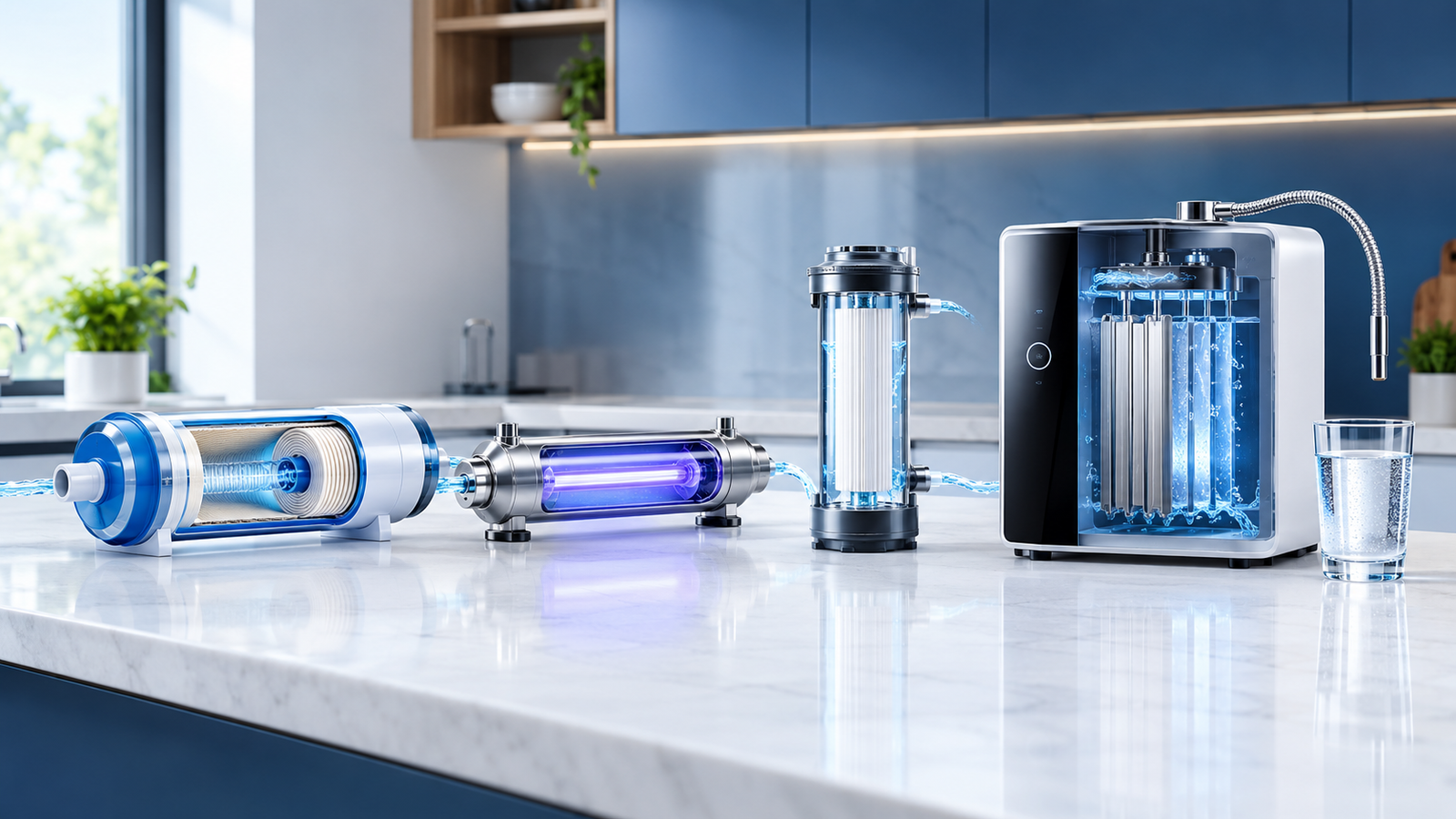
01. Why Are There Different Water Treatment Technologies?
Different water sources can have different characteristics. Municipal water, borewell water, tanker water and other sources may vary in dissolved substances, suspended particles and microbiological conditions.
This is why there is no single water treatment technology that is automatically suitable for every water source. RO, UV, UF and water ionizers use different processes and have different purposes.
Before selecting a system, it is useful to understand the source of your water and the important parameters that describe its quality.
02. What Is RO?
RO stands for Reverse Osmosis. RO is a membrane-based water treatment technology that uses pressure to move water through a semipermeable membrane.
The RO membrane is designed to allow water molecules to pass through while retaining many dissolved substances and other impurities.
RO is therefore commonly used when reducing dissolved substances is an important part of the water treatment requirement.
03. What Is UV Water Treatment?
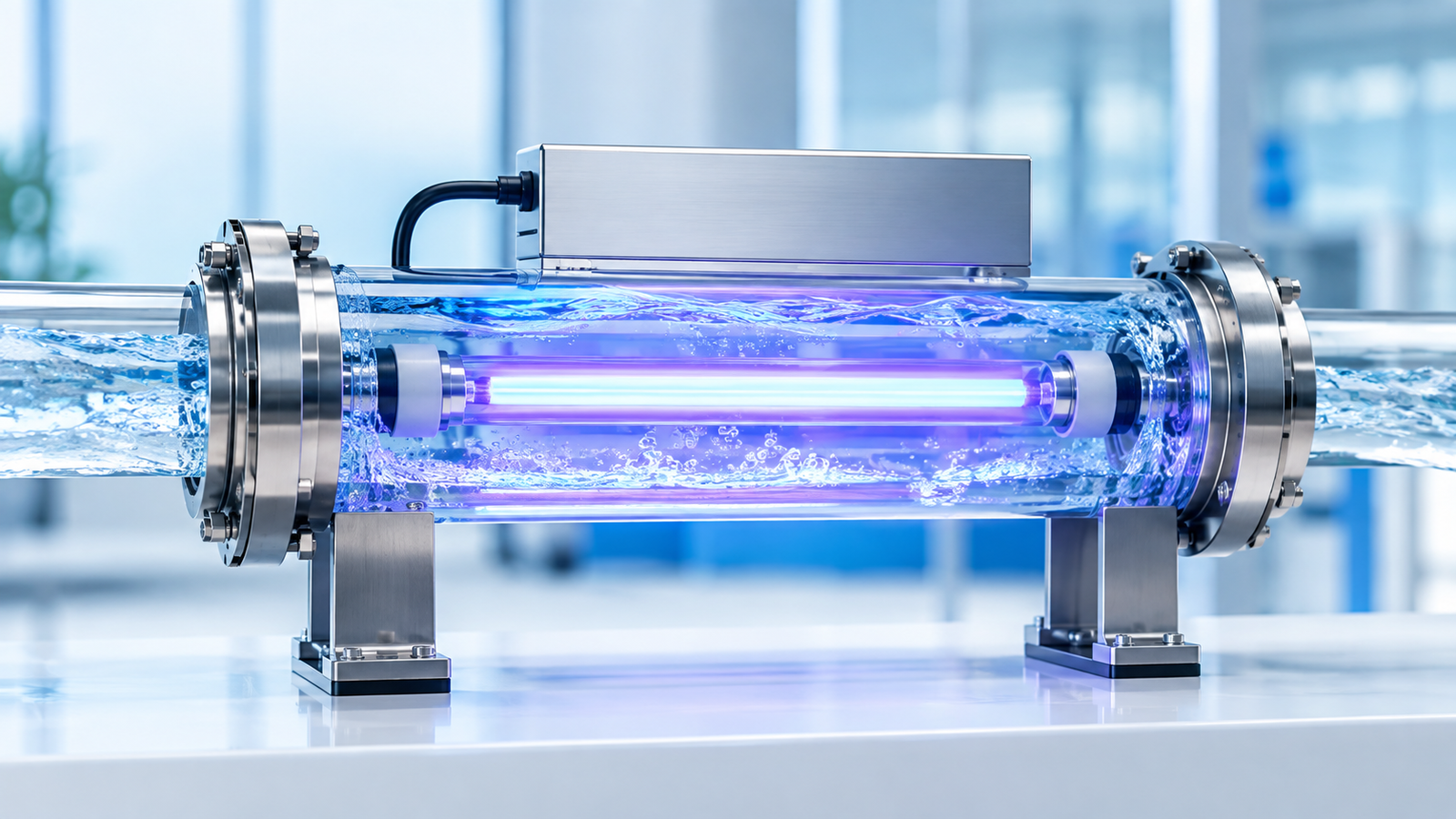
UV stands for Ultraviolet. UV water treatment uses ultraviolet light as part of the water treatment process.
Unlike RO, UV does not work by passing water through an RO membrane. Instead, the technology uses UV light inside a treatment chamber.
UV is therefore a different approach to water treatment compared with membrane-based technologies such as RO and UF.
04. What Is UF Water Treatment?
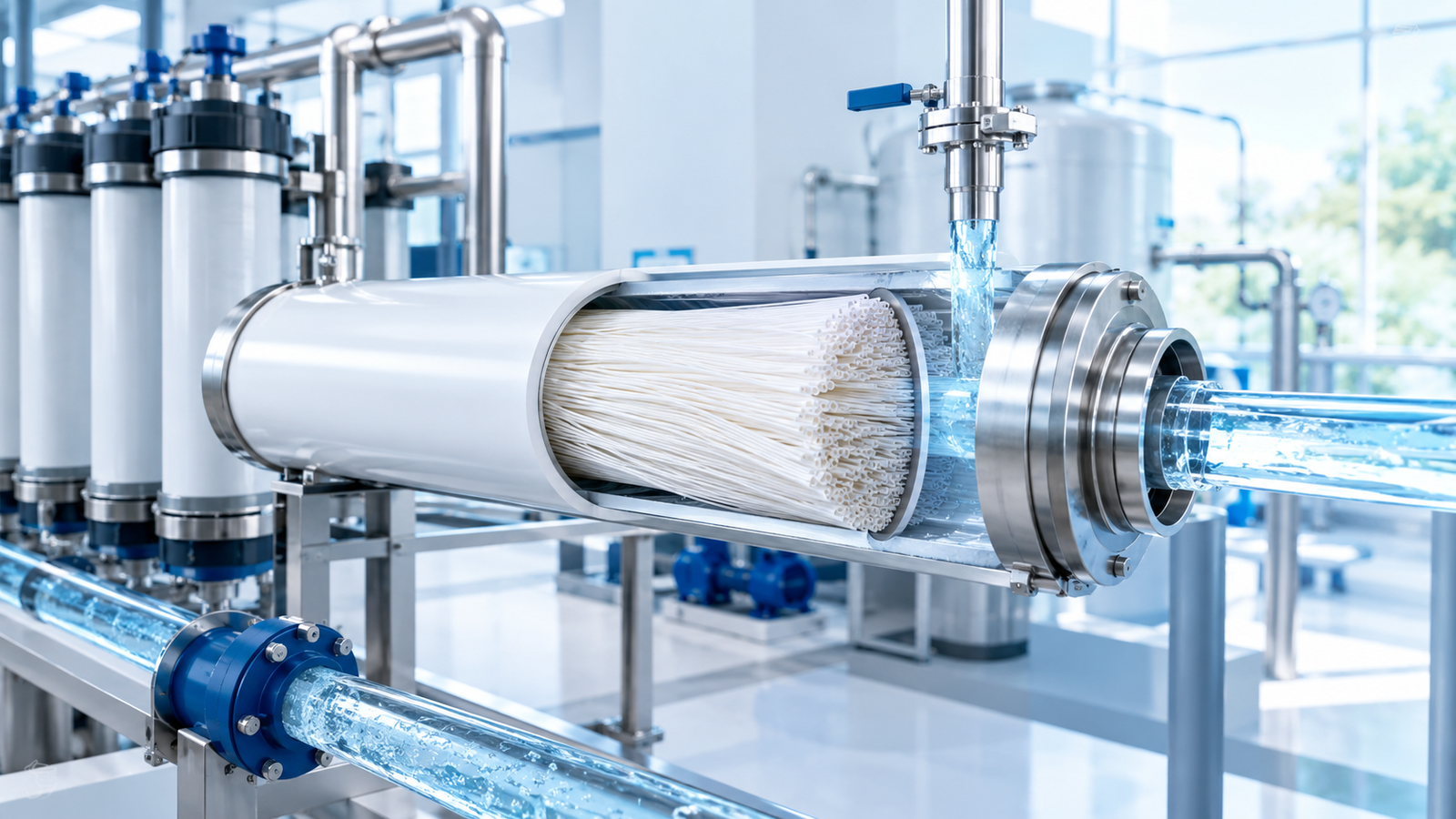
UF stands for Ultrafiltration. UF is a membrane-based filtration technology that uses a very fine membrane structure to separate certain particles and substances from water.
UF and RO are both membrane technologies, but they are not the same process. Their membrane characteristics and treatment objectives are different.
Understanding the difference between RO and UF is important when comparing different water filtration technologies.
05. What Is a Water Ionizer?
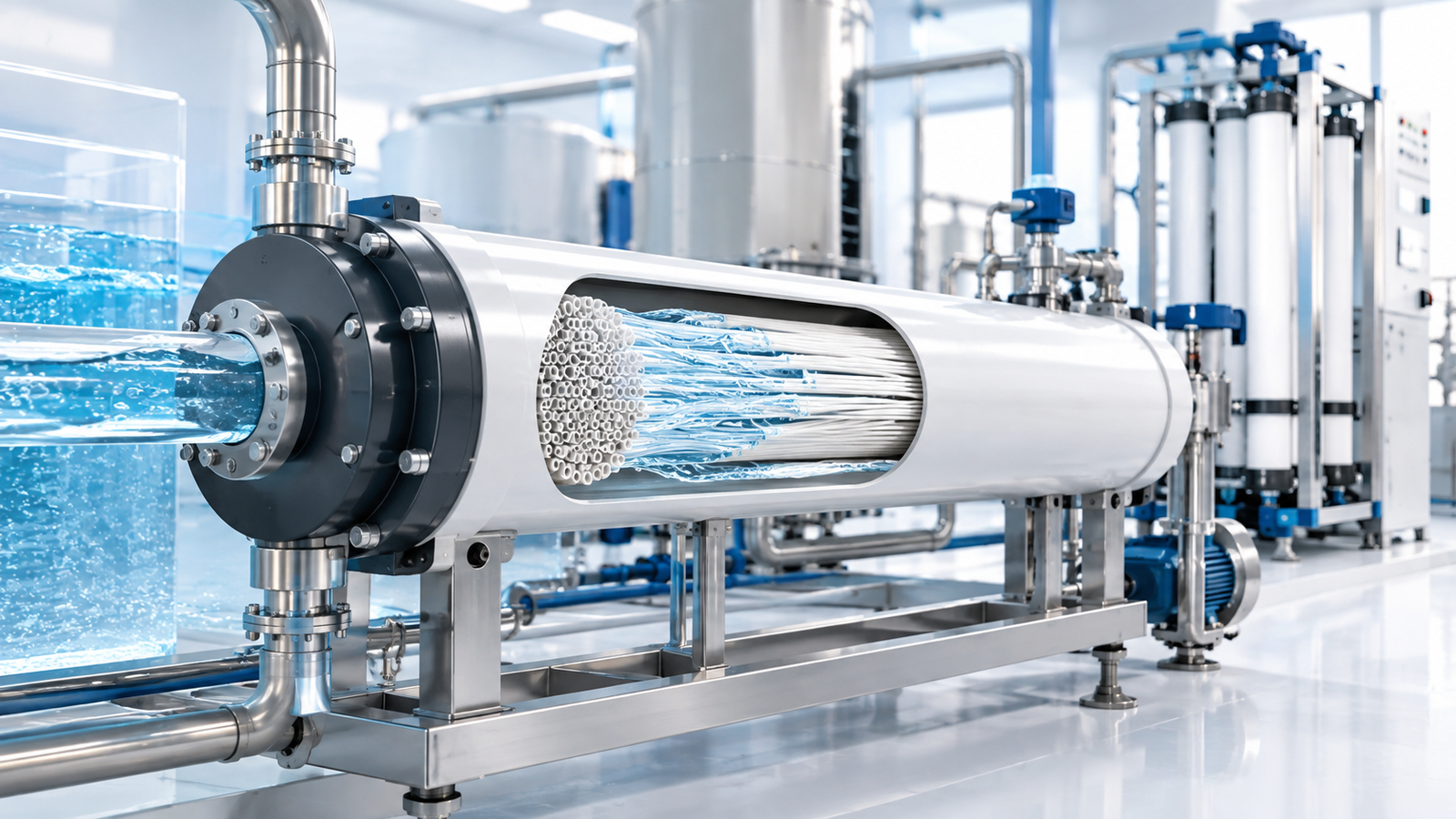
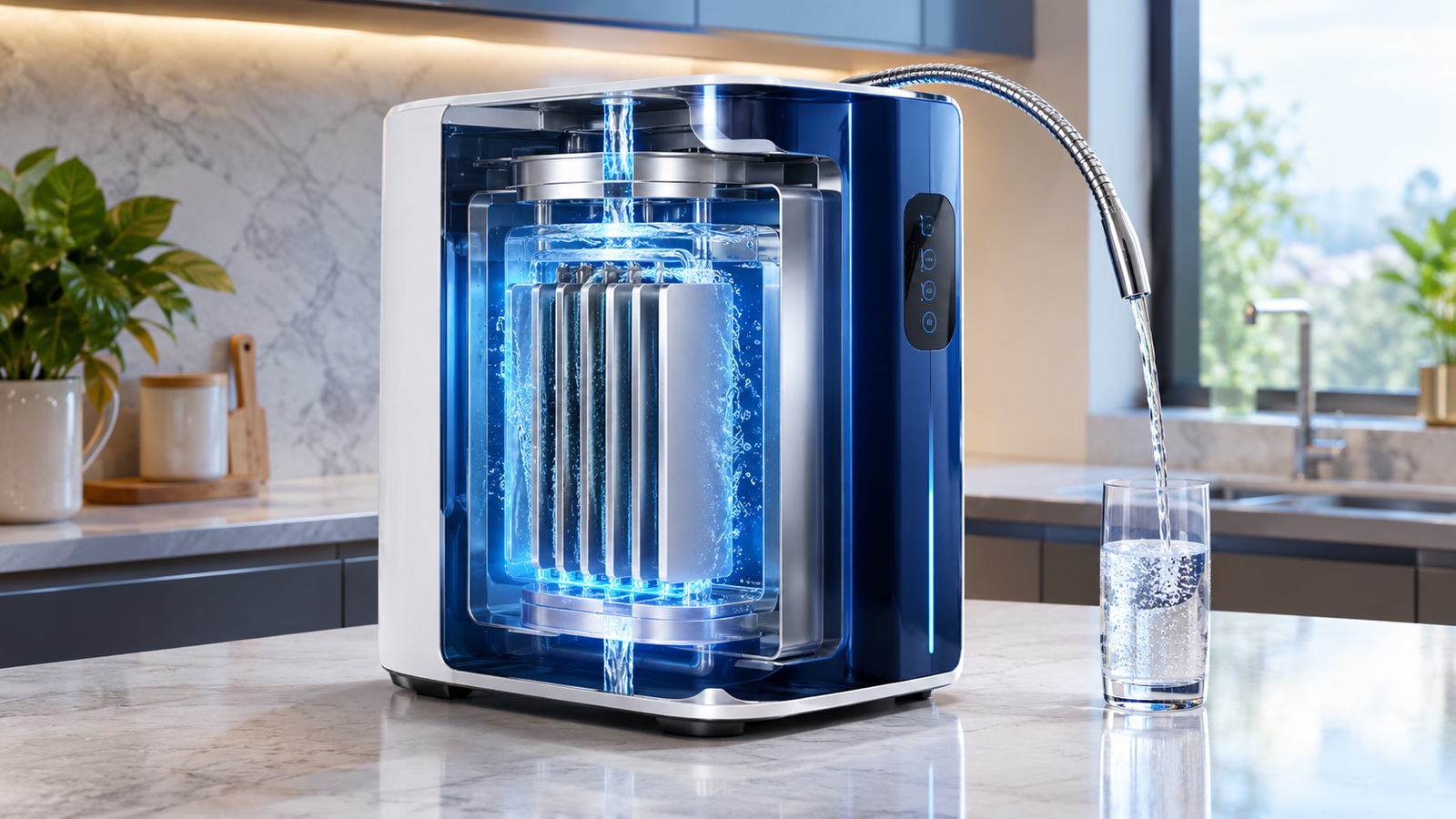
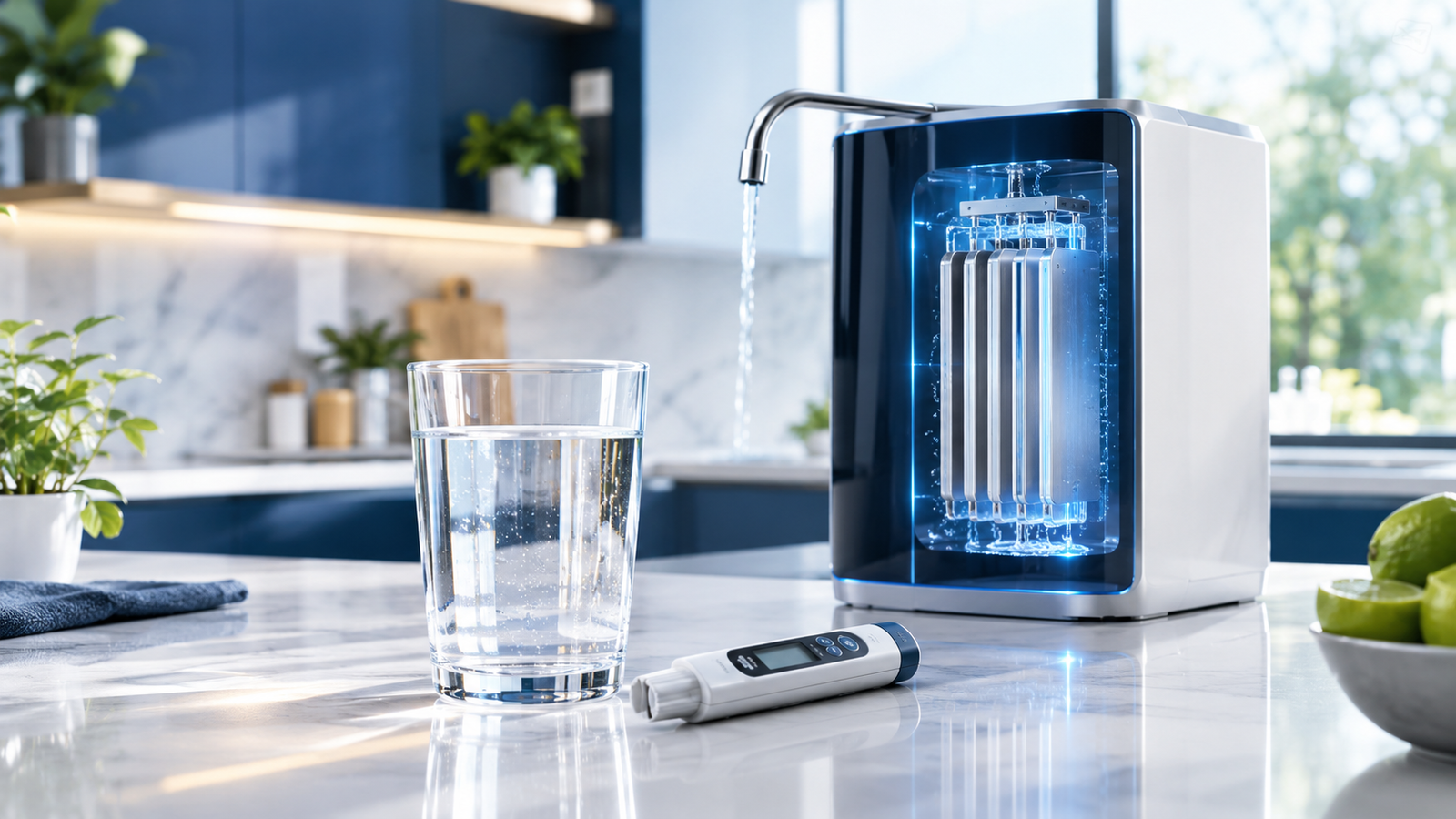
A water ionizer works differently from RO, UV and UF. An electrolysis-based water ionizer uses electrolysis plates to process water.
During the electrolysis process, water passes through an electrolysis chamber containing multiple metal plates. The process can produce different water outputs with different characteristics and pH levels.
A water ionizer should therefore be understood as an electrolysis-based water technology, rather than simply another type of RO, UV or UF filter.
If you want to understand pH before exploring water ionizer technology, read our guide on the pH of water .
06. RO vs UV vs UF vs Water Ionizer
The simplest way to understand RO vs UV vs UF vs Water Ionizer is to compare the basic process behind each technology.
| Technology | Basic Process | Core Technology |
|---|---|---|
| RO | Reverse Osmosis | Membrane-based separation |
| UV | Ultraviolet light | UV-based water treatment |
| UF | Ultrafiltration | Membrane-based filtration |
| Water Ionizer | Electrolysis | Electrolysis plates and different water outputs |
07. RO vs Water Ionizer: What's the Difference?
One of the common comparisons people make is RO vs Water Ionizer.
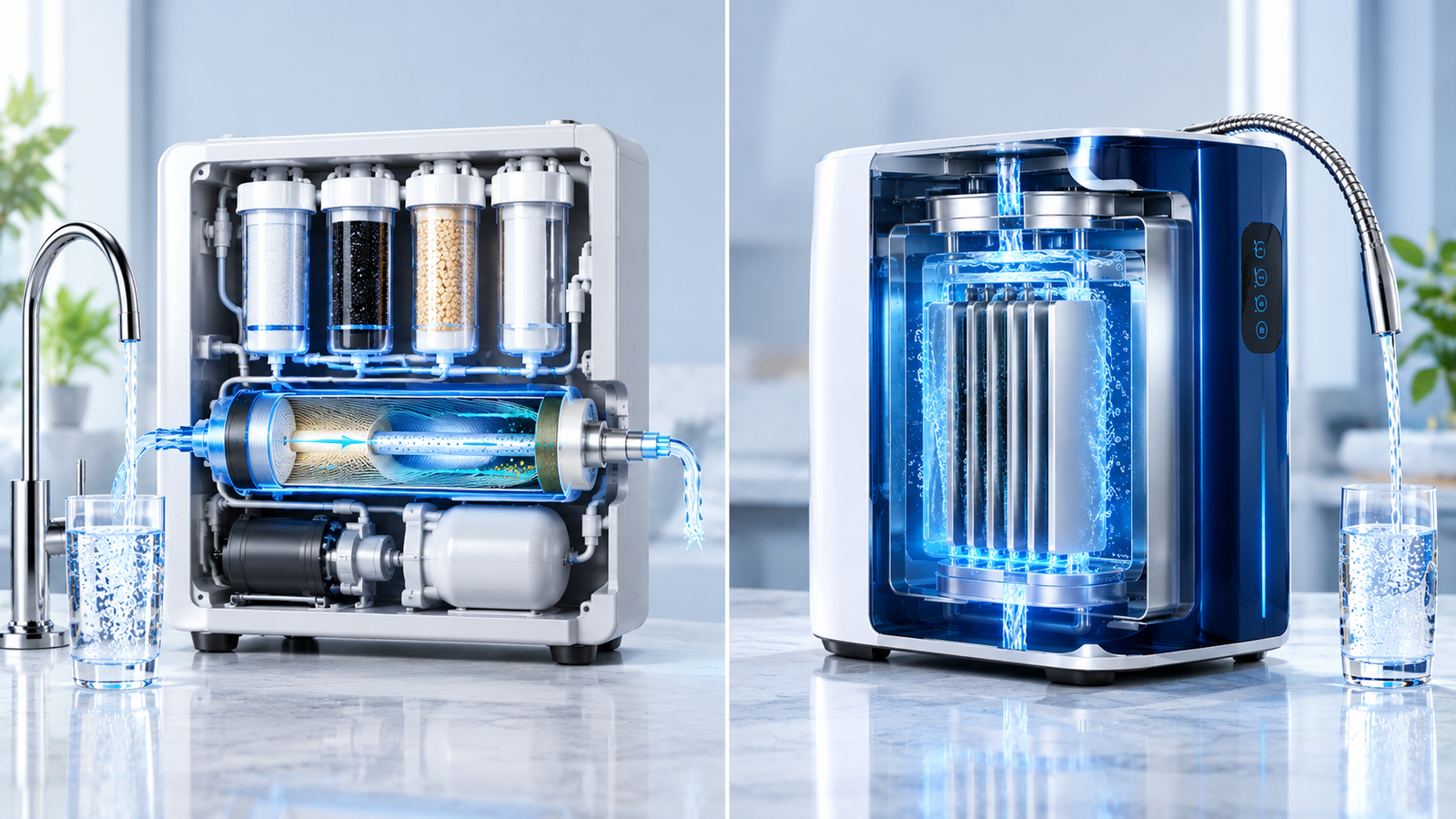
RO is a membrane-based separation technology. Its main process involves passing water through a semipermeable membrane under pressure.
A water ionizer, on the other hand, is based on electrolysis. It uses electrolysis plates to process water and produce different water outputs with different characteristics and pH levels.
Therefore, RO and a water ionizer should not be treated as identical technologies. They are based on fundamentally different processes.
08. Does One Water Technology Replace Another?
Not necessarily.
RO, UV, UF and water ionizers are based on different technologies. Whether one technology is appropriate depends on the characteristics of the water source and the intended water treatment requirements.
In some situations, different water treatment technologies may also be used together as part of a broader water treatment setup.
09. How Should You Choose a Water Treatment Technology?
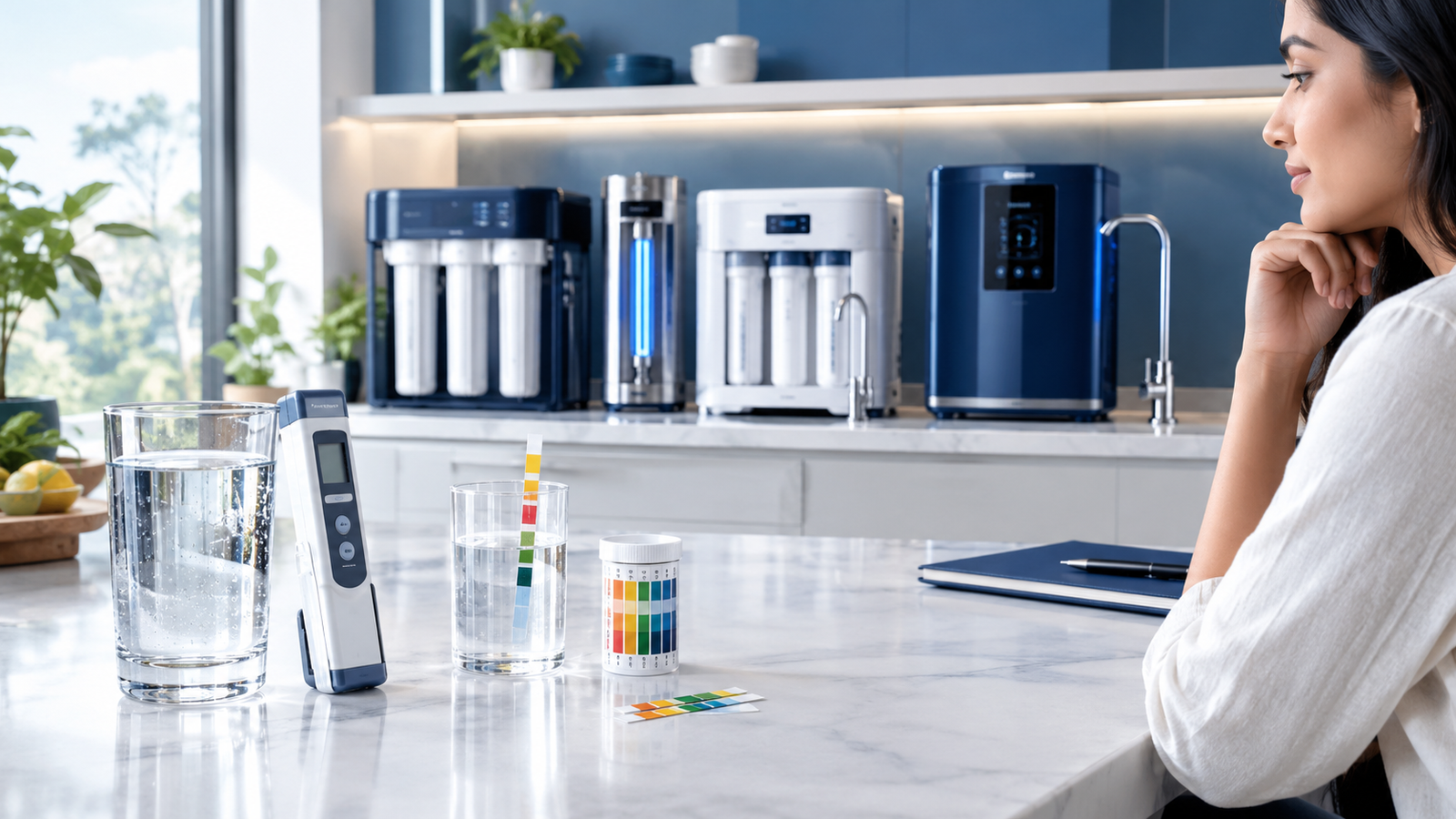
Choosing a water treatment technology should begin with understanding the water you actually have.
Start by identifying your water source. Then consider factors such as TDS, pH and other relevant water-quality information.
Once you understand the requirement, you can compare different water treatment technologies and identify which approach may be appropriate for your situation.
10. What Should You Know Before Choosing a Water Ionizer?
If you are considering a water ionizer, it is useful to understand how the technology actually works.
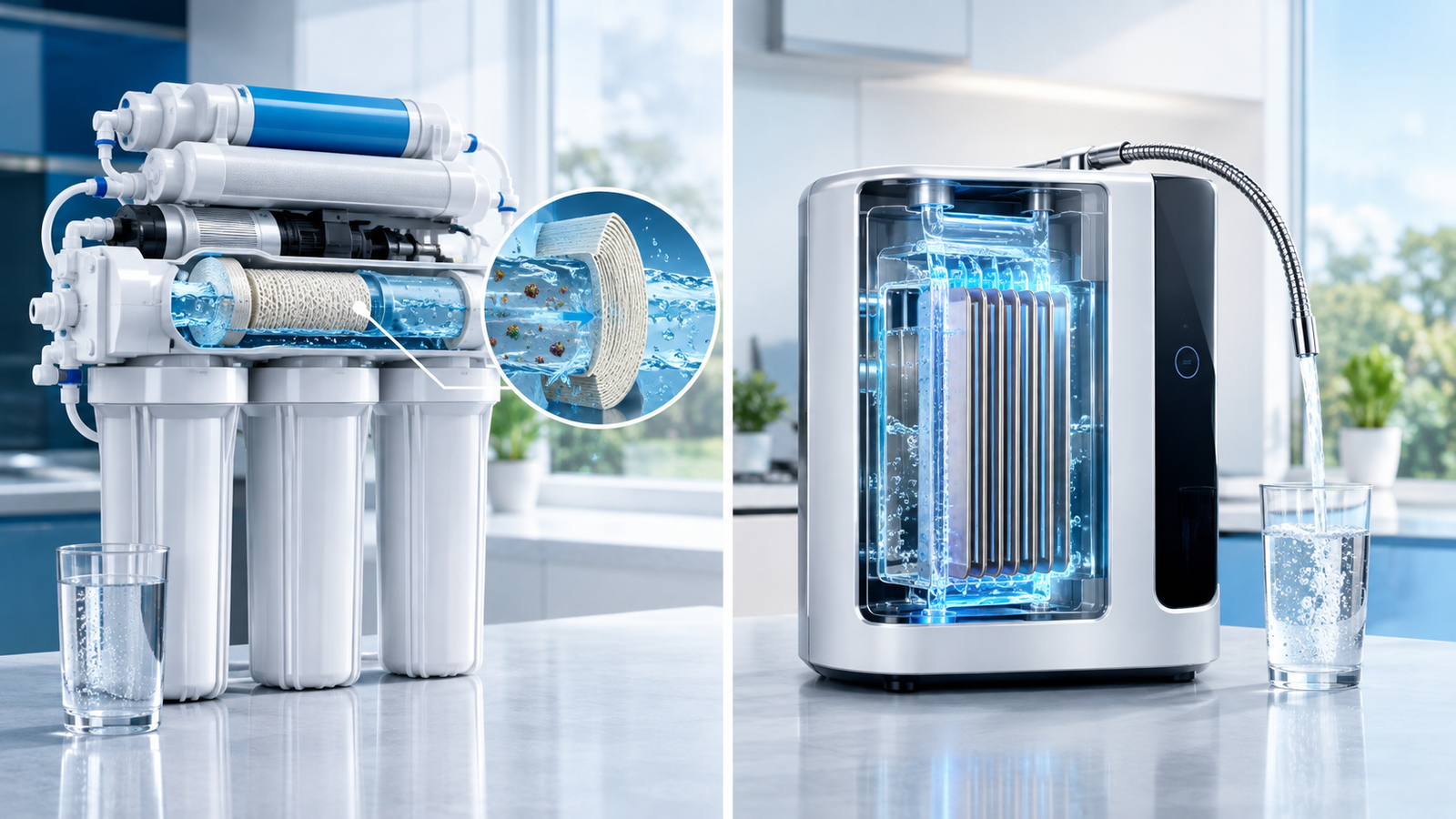
An electrolysis-based water ionizer uses an electrolysis chamber with multiple plates. Water passes through this chamber and the electrolysis process produces different water outputs.
This is different from RO, UV and UF because the core process is electrolysis rather than membrane filtration or ultraviolet treatment.
Understanding the technology helps you evaluate a water ionizer based on its actual working principle instead of assuming that every water treatment system performs the same function.
Final Takeaway
RO vs UV vs UF vs Water Ionizer is not simply a comparison of four different machines. These are different water technologies based on different processes.
UV → Ultraviolet light treatment
UF → Membrane-based filtration
Water Ionizer → Electrolysis using electrolysis plates
The right choice starts with understanding your water source, water quality and specific requirement.
Understand Your Water. Choose Your Technology.
Want to understand how an electrolysis-based water ionizer works and explore Kenjan's water ionizer technology?